+91 7889 566 807
Amarnath Yatra Travel Guide Best Time to Visit Routes and Tours
Kashmir

Discover Amarnath

Amarnath is one of India's most revered Hindu pilgrimage destinations, located high in the Kashmir Himalayas. The sacred Amarnath Cave

Best Season

July To August

Altitude

3,888 m

From Airport

72 km

Destination Type

Religious, pilgrimage

Destination Overview

The Mystical Cave of Amarnath

Amarnath is one of India's most revered Hindu pilgrimage destinations, located high in the Kashmir Himalayas. The sacred Amarnath Cave is famous for the naturally formed ice Shiva Lingam and attracts pilgrims from across India and around the world during the annual Shri Amarnathji Yatra.

The Holy Cave is situated at an altitude of approximately 3,888 metres and can be reached through two principal pilgrimage routes. The traditional Pahalgam route passes through Chandanwari, Pissu Top, Sheshnag and Panchtarni before reaching the Holy Cave, while the Baltal route provides a shorter but steeper approach through Domel and Barari.

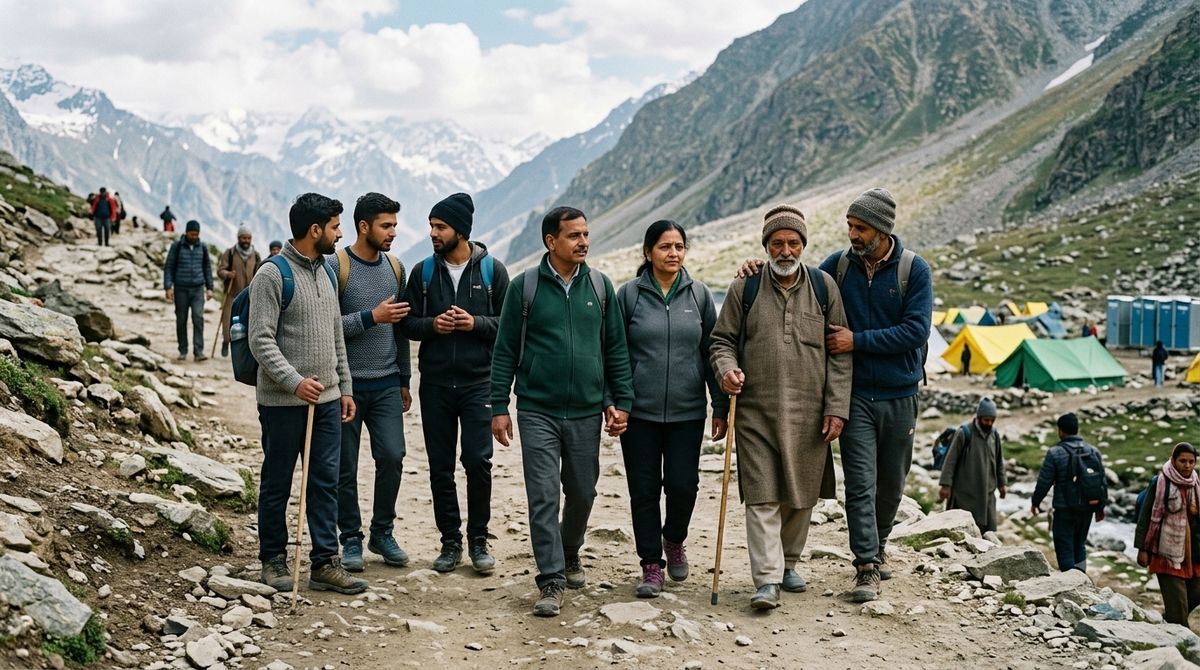
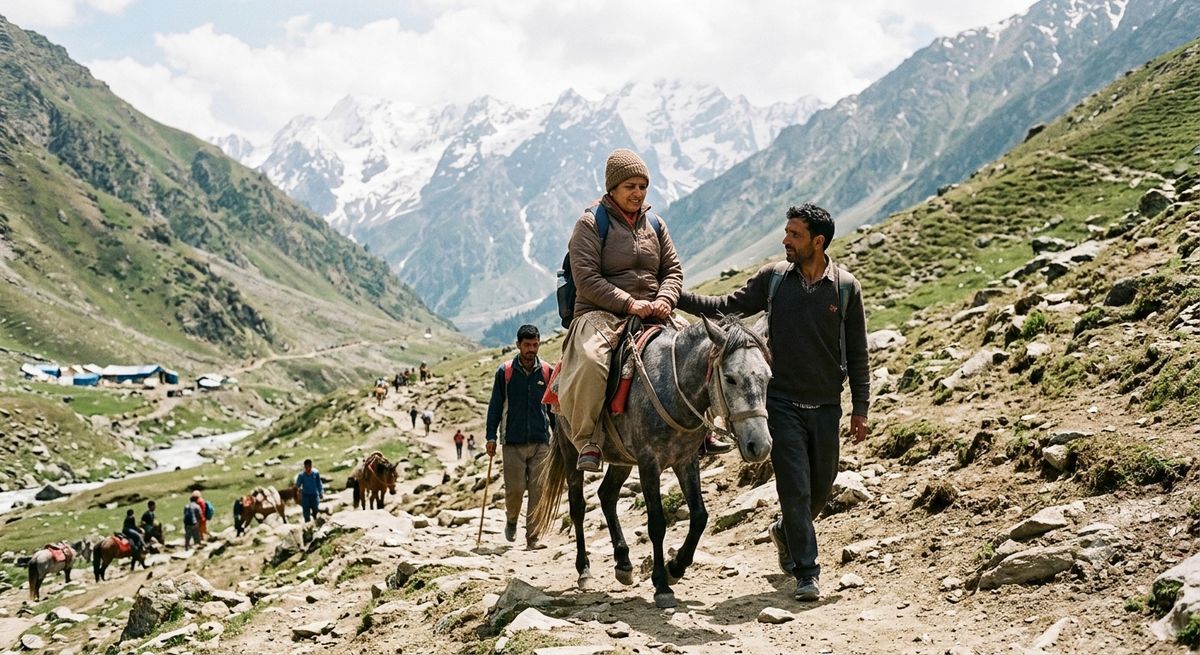
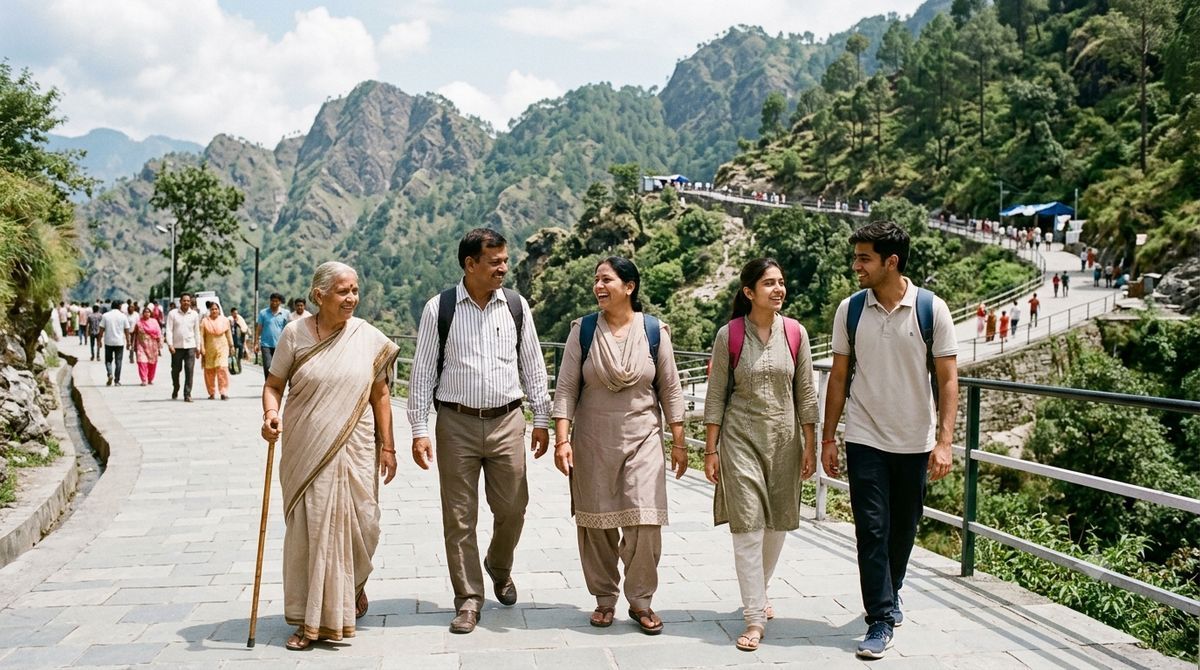
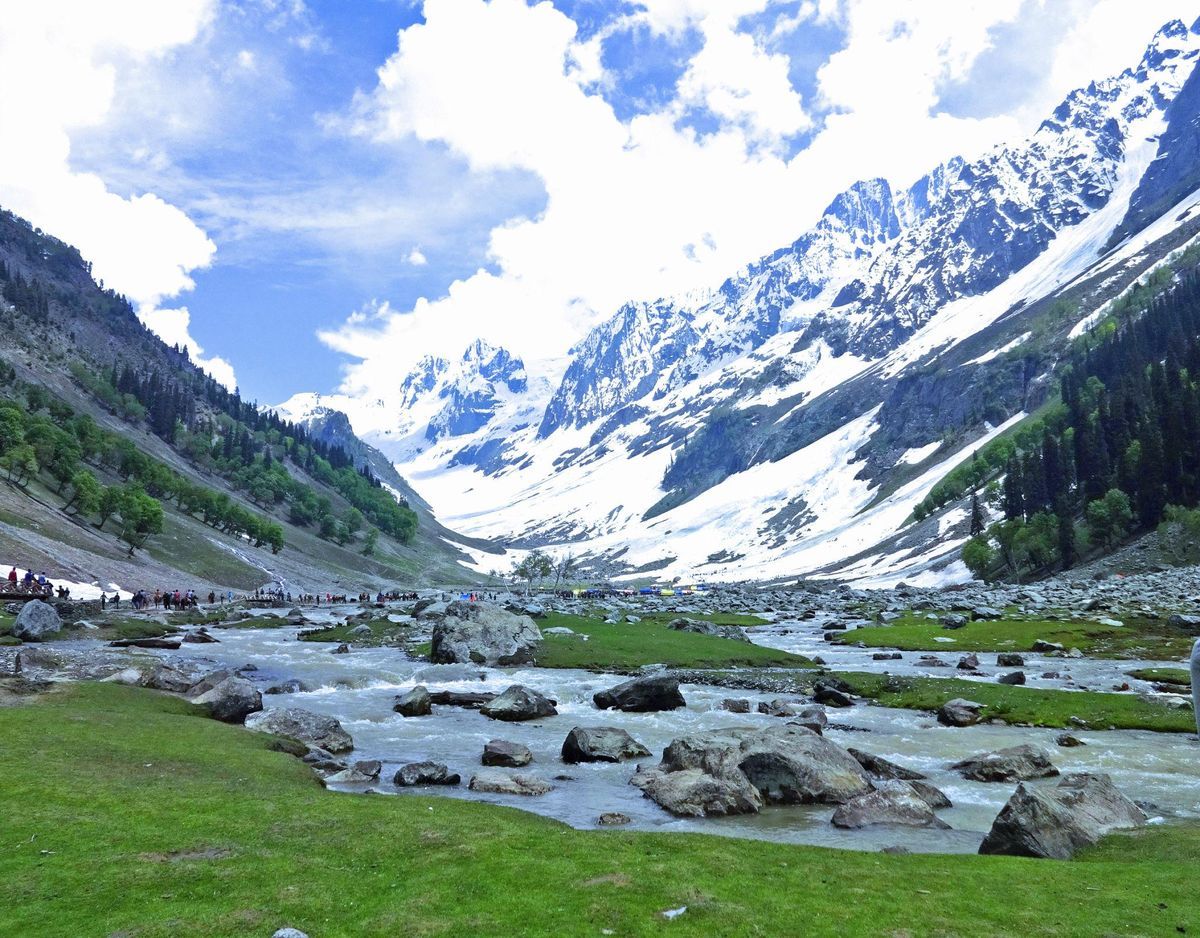
The Amarnath Yatra is a challenging high-altitude pilgrimage surrounded by dramatic Himalayan scenery, glaciers, valleys and snow-covered mountains. Pilgrims can undertake the journey on foot, while authorized ponies and palkis are available on the pilgrimage routes. The pilgrimage is conducted during a limited annual season because of the high-altitude weather conditions.

Amarnath is best suited to travellers seeking a spiritual journey, religious pilgrimage and high-altitude Himalayan experience. Proper physical preparation, warm clothing, suitable trekking footwear and attention to official Yatra guidelines are essential before undertaking the journey.

Quick Facts

Everything You Need to Know

Essential travel information to help you plan your visit to Amarnath

Best Time

July To August

Ideal Stay

3–4 Days

Altitude

3,888 m

Distance

72 km From Airport

Nearest Airport

Srinagar (SXR)

Temperature

-5°C to 15°C

Famous For

Hindu Pilgrimage, Amarnath Cave, Ice Shiva Lingam

Perfect For

Pilgrimage, Spiritual Travel, Religious Tourism, Adventure, Trekking

Available Tours

Explore Amarnath Tour Packages

  • Amarnath Yatra Package
    3 Days / 2 Nights ★ 4.8 (42 Reviews)

    Amarnath Yatra Package

    Srinagar, Pahalgam, Amarnath Cave

  • Amarnath Pahalgam Special Package
    4 Days / 3 Nights ★ 4.5 (65 Reviews)

    Amarnath Pahalgam Special Package

    Srinagar, Pahalgam, Amarnath Cave

  • Amarnath Yatra via Sonmarg & Baltal
    4 Days / 3 Nights ★ 4.9 (116 Reviews)

    Amarnath Yatra via Sonmarg & Baltal

    Srinagar, Sonmarg, Baltal, Amarnath Cave

  • Amarnath Yatra with Kashmir Holiday
    6 Days / 5 Nights ★ 4.9 (154 Reviews)

    Amarnath Yatra with Kashmir Holiday

    Srinagar, Sonmarg, Baltal, Amarnath Cave, Gulmarg, Pahalgam

Kashmir landscape

Plan Your Next Journey

Your Travel Adventure Starts Here

Let our local travel experts create a memorable experience with personalized tours, comfortable stays and complete travel assistance.

Nearby Attractions

Explore the Best of Amarnath

Amarnath is one of India's most revered Hindu pilgrimage destinations, located high in the Kashmir Himalayas. The sacred Amarnath Cave

Amarnath Holy Cave

The Amarnath Holy Cave is the main pilgrimage destination and one of the most sacred Hindu shrines in the Kashmir Himalayas. The cave is famous for the naturally formed ice Shiva Lingam, which is traditionally regarded by devotees as a manifestation of Lord Shiva.

Located at approximately 3,888 metres above sea level, the cave is surrounded by dramatic Himalayan mountains and high-altitude landscapes. Reaching the Holy Cave is the main objective of the annual Amarnath Yatra.

  • Best Time: During the official annual Amarnath Yatra.
  • Altitude: Approximately 3,888 metres.
  • Highlights: Holy Cave, Ice Shiva Lingam, Himalayan Scenery.
  • Activities: Pilgrimage, Darshan, Spiritual Experience.

Pahalgam Yatra Route

The Pahalgam route is the traditional and longer route to the Amarnath Holy Cave. The pilgrimage journey passes through Chandanwari, Pissu Top, Sheshnag and Panchtarni before reaching the Holy Cave.

The route is known for its spectacular mountain scenery, alpine landscapes, streams and high-altitude valleys. Although longer than the Baltal route, many pilgrims choose it for the traditional pilgrimage experience and scenic surroundings.

  • Route: Pahalgam – Chandanwari – Pissu Top – Sheshnag – Panchtarni – Holy Cave.
  • Approximate Trek: Around 32 km from the Pahalgam side according to the Shrine Board.
  • Best For: Traditional Pilgrimage, Trekking, Scenic Mountain Landscapes.
  • Activities: Trekking, Pilgrimage, Photography.

Baltal Yatra Route

The Baltal route is the shorter and more direct approach to the Amarnath Holy Cave. The route begins at Baltal and passes through Domel and Barari before reaching the Holy Cave.

The route is considerably shorter than the traditional Pahalgam route but includes steep sections and can be physically demanding. Baltal is located near Sonamarg and is an important base camp for the annual pilgrimage.

  • Route: Baltal – Domel – Barari – Holy Cave.
  • Approximate Trek: Around 14 km.
  • Best For: Shorter Pilgrimage, Experienced Trekkers, Time-Conscious Pilgrims.
  • Activities: Trekking, Pilgrimage, Mountain Photography.

Chandanwari

Chandanwari is the principal access point for the traditional Pahalgam route to the Amarnath Holy Cave. Pilgrims begin the main high-altitude trekking section from this area.

The surroundings feature beautiful mountain landscapes and the Lidder Valley, making Chandanwari an important stop before the challenging sections of the pilgrimage begin.

  • Best Time: During the official Yatra season.
  • Location: Near Pahalgam.
  • Highlights: Yatra Starting Point, Mountain Scenery, Valley Views.
  • Activities: Pilgrimage, Trekking, Photography.

Sheshnag

Sheshnag is one of the most scenic and important camps along the traditional Pahalgam route. The area is surrounded by towering Himalayan peaks and is named after the nearby Sheshnag Lake.

The spectacular high-altitude landscape makes Sheshnag one of the memorable sections of the Amarnath pilgrimage. Pilgrims commonly stay overnight in the area as part of the traditional route itinerary.

  • Best Time: During the official Yatra season.
  • Location: Pahalgam route to Amarnath.
  • Highlights: Sheshnag Lake, Mountains, High-Altitude Scenery.
  • Activities: Pilgrimage, Camping, Photography.

Panchtarni

Panchtarni is an important high-altitude camp located near the final section of the Pahalgam route. The area is surrounded by dramatic mountain scenery and serves as one of the principal stopping points before pilgrims continue toward the Holy Cave.

From Panchtarni, pilgrims continue toward the Amarnath Cave through the final section of the pilgrimage route.

  • Best Time: During the official Yatra season.
  • Location: Near the Amarnath Holy Cave.
  • Highlights: High-Altitude Valley, Mountain Views, Pilgrim Camp.
  • Activities: Pilgrimage, Trekking, Photography.

Pissu Top

Pissu Top is a significant high-altitude section of the traditional Pahalgam pilgrimage route. The climb provides dramatic views of the surrounding mountains and marks one of the more challenging portions of the journey.

Pilgrims should maintain a steady pace and allow sufficient time for rest because the route involves significant elevation gain and high-altitude conditions.

  • Best Time: During the official Yatra season.
  • Location: Pahalgam – Amarnath route.
  • Highlights: Mountain Views, High-Altitude Trail, Scenic Landscapes.
  • Activities: Trekking, Pilgrimage, Photography.
Things to Do

Experiences You Shouldn't Miss

Check out the experiences that, Amarnath offers every traveller to enjoy.

  • Undertake the Amarnath Yatra

    Complete the sacred pilgrimage to the Amarnath Holy Cave through either the traditional Pahalgam route or the shorter Baltal route.

  • Seek Darshan at the Holy Cave

    Visit the sacred cave and experience the spiritual atmosphere surrounding the naturally formed ice Shiva Lingam.

  • Trek Through the Himalayas

    Experience high-altitude trekking through valleys, mountain passes, streams and dramatic Himalayan landscapes.

  • Choose the Pahalgam Route

    Take the traditional route through Chandanwari, Pissu Top, Sheshnag and Panchtarni for a longer and more scenic pilgrimage experience.

  • Choose the Baltal Route

    Use the shorter Baltal route for a more direct approach to the Holy Cave, while preparing for its steep sections and demanding terrain.

  • Experience Sheshnag

    Enjoy the spectacular high-altitude scenery around Sheshnag and its surrounding mountains during the pilgrimage.

  • Photography

    Capture dramatic Himalayan landscapes, glaciers, valleys, mountain trails and the scenic pilgrimage routes.

  • Experience the Spiritual Atmosphere

    Join fellow pilgrims, visit sacred sites along the route and experience the unique spiritual atmosphere of the annual Amarnath Yatra.

Best Time to Visit

Choose the Perfect Season

Every season in Amarnath offers a unique experience. Use the guide below to choose the best time based on your travel preferences.

Season Months Weather Ideal For
🌱 Spring March – May Cold and snowy conditions remain at high elevations, and the Holy Cave area is generally inaccessible to regular pilgrims. Mountain Snow Views, Preparation for Yatra
☀️ Yatra Season June – August Limited summer pilgrimage season with cold high-altitude conditions, rapidly changing weather and possible rain or snowfall. Amarnath Yatra, Pilgrimage, Trekking
🍂 Autumn September – October Cold weather returns rapidly at high elevations after the official Yatra season and access to the Holy Cave is normally restricted. Mountain Scenery Around Accessible Areas
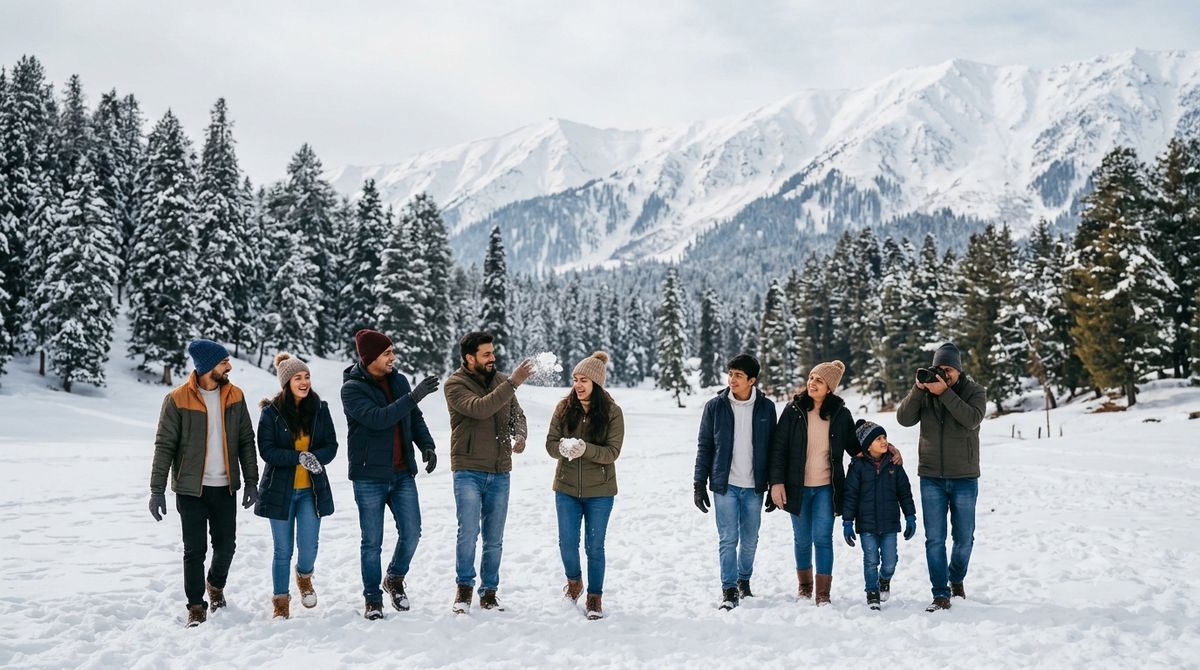
❄️ Winter November – February Severe cold, heavy snow and extreme high-altitude conditions make the Holy Cave inaccessible for the regular pilgrimage. Snow-Covered Himalayan Landscapes

Frequently Asked Questions

Find answers to the most common questions about visiting Amarnath.

What is Amarnath famous for?

Amarnath is famous for the sacred Amarnath Holy Cave and the naturally formed ice Shiva Lingam associated with Lord Shiva. It is one of India's most important Hindu pilgrimage destinations.

What is the best time to visit Amarnath?

The best time to visit Amarnath is during the official annual Shri Amarnathji Yatra, which is generally conducted during the summer months. Exact opening and closing dates change each year.

How many days are enough for Amarnath Yatra?

A 3 to 4 day itinerary is suitable for many pilgrims, depending on the selected route, accommodation and travel arrangements. The Pahalgam route generally requires more time than the shorter Baltal route.

How far is Amarnath from Srinagar Airport?

Srinagar International Airport is approximately 72 km from the Amarnath Holy Cave and is the nearest airport listed by the local administration.

What is the altitude of Amarnath Cave?

The Amarnath Holy Cave is located at approximately 3,888 metres or 12,756 feet above sea level.

How long is the Amarnath Yatra?

The pilgrimage distance depends on the selected route. The Shrine Board describes the Pahalgam route as approximately 32 km and the Baltal route as approximately 14 km to the Holy Cave.

Which is better, Pahalgam or Baltal route for Amarnath?

The Pahalgam route is longer and is traditionally preferred by pilgrims seeking a longer and more scenic pilgrimage experience. The Baltal route is considerably shorter but has steeper sections and can be physically demanding.

Is Amarnath suitable for families?

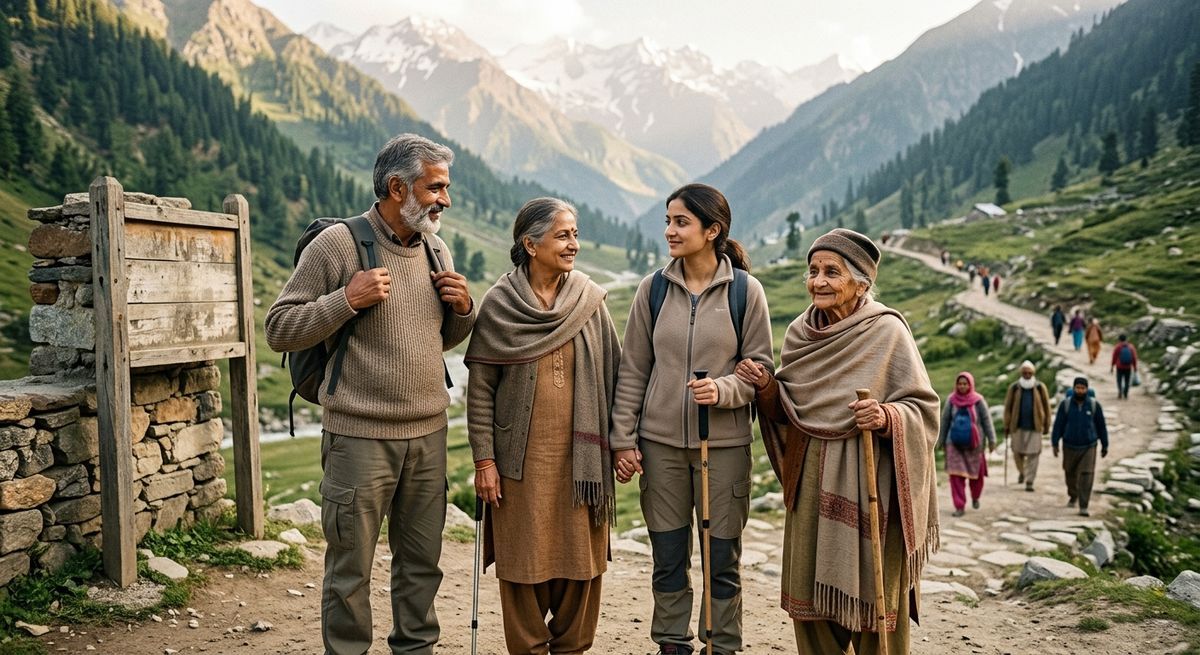
Amarnath can be undertaken by physically fit families who are properly prepared for high-altitude trekking. The pilgrimage involves demanding terrain and cold weather, so elderly travellers and people with health concerns should consult a doctor before planning the journey.

Can children visit Amarnath?

Yatra registration rules apply to pilgrims of different age groups. For the 2026 Yatra, the Shrine Board states that children below 13 years and persons above 70 years are not permitted to register for the pilgrimage.

Can senior citizens undertake the Amarnath Yatra?

The high altitude and demanding terrain make the Amarnath Yatra physically challenging. The 2026 Shrine Board guidelines do not permit persons above 70 years to register, and all pilgrims should assess their fitness before undertaking the journey.

Is helicopter service available for Amarnath Yatra?

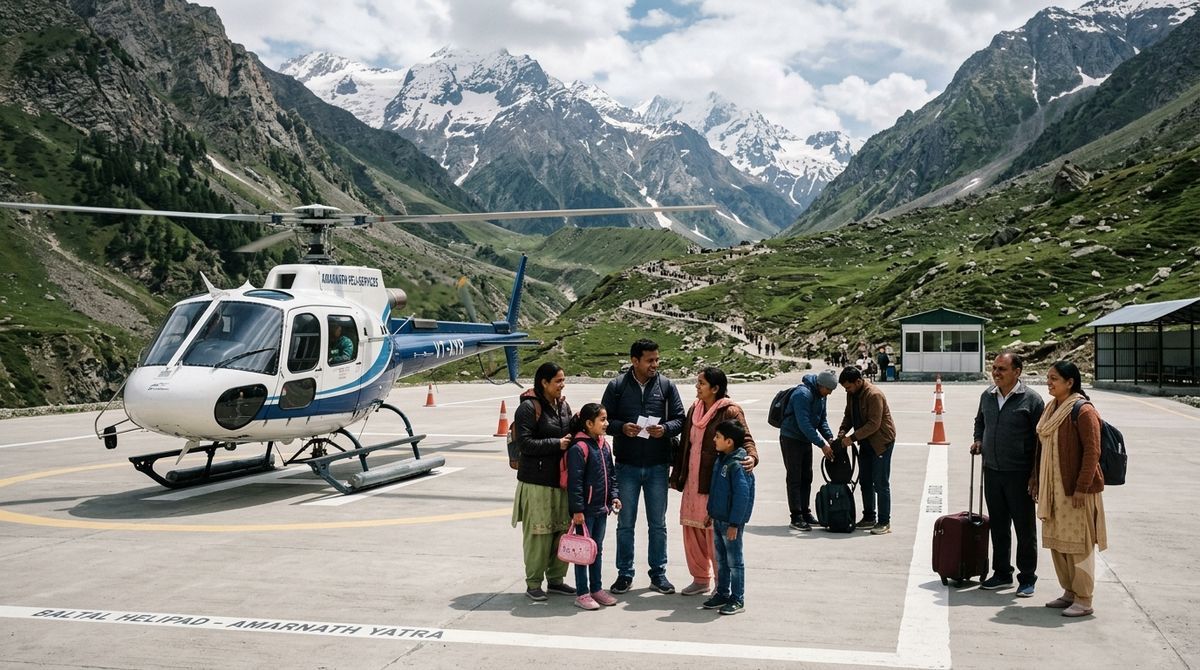
Helicopter services have been offered during previous Yatras, but arrangements can change from year to year. For the 2026 Yatra, the Shrine Board has announced that all Yatra routes are designated as a no-flying zone and helicopter services for pilgrim travel are therefore unavailable during the 2026 Yatra.

What should I carry for Amarnath Yatra?

Pilgrims should carry sufficient warm clothing, waterproof shoes, rain protection, suitable trekking footwear, essential medicines and required identification and Yatra documents. Weather can change rapidly at high altitude.

Do I need registration for Amarnath Yatra?

Yes. Pilgrims must complete the required registration and carry the valid Yatra permit and RFID card before proceeding through the designated access control points.

What is the temperature at Amarnath?

Temperatures at the Holy Cave can remain very cold even during the summer pilgrimage season. A practical range is approximately -5°C to 15°C, although conditions can change rapidly and temperatures may fall below 5°C.

What are the main places on the Amarnath Yatra route?

The principal locations on the Pahalgam route include Chandanwari, Pissu Top, Sheshnag, Panchtarni and the Holy Cave. The Baltal route passes through Domel and Barari before reaching the Holy Cave.

Is Amarnath Yatra difficult?

Yes. Amarnath is a high-altitude pilgrimage and involves steep climbs, long walking distances, cold temperatures and rapidly changing mountain weather. Proper physical preparation and following official safety instructions are important.
Inquire Now WhatsApp WhatsApp Call Now